Inspirational journeys
Follow the stories of academics and their research expeditions
Can AI Trading Bots Replace Human Traders in Future Financial Markets

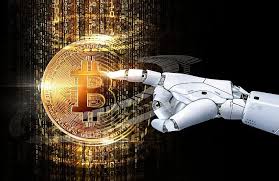
The financial markets are changing faster than ever before, and one of the biggest drivers of this change is the rise of the AI trading bot. These systems use artificial intelligence, machine learning, and advanced algorithms to analyze market data and execute trades automatically. Instead of relying on human emotions or slow decision-making, they can react to price movements in milliseconds, which gives them a major advantage in fast-moving markets. Platforms like Winvest are becoming part of this evolution by exploring smarter trading solutions that aim to improve efficiency and accuracy.
At the same time, human traders still play an important role in financial decision-making. While AI trading bots can process huge amounts of data quickly, they do not fully understand human psychology, global politics, or unexpected events in the same way people do. This raises an important question for the future of investing: can machines fully replace human judgment, or will both continue to work together in shaping financial markets? Understanding this balance is key to seeing where trading is headed in the coming years.
What is an AI Trading Bot and How It Works in Modern Markets
An AI trading bot is a software program designed to analyze financial data and make trading decisions without constant human input. It uses artificial intelligence to study charts, trends, and market signals to decide when to buy or sell assets like stocks, forex, or cryptocurrencies. These bots are built to follow strategies that can be based on technical indicators, historical data, and even real-time news sentiment, making them highly adaptive to different market conditions.
In modern financial markets, an AI trading bot works by continuously scanning data from multiple sources at once. It can detect patterns that are too complex or too fast for a human trader to notice. Once it identifies a potential opportunity, it executes trades automatically based on predefined rules or learned behavior. This level of automation allows trading systems to operate 24/7, which is especially useful in global markets where price movements never stop.
The Role of Human Traders in Today’s Financial Ecosystem
Human traders still hold a strong position in the financial world because they bring intuition, experience, and emotional understanding to the table. Unlike an AI trading bot, human traders can interpret global news, political tensions, and unexpected economic events in a more flexible way. They are able to adjust strategies based on real-world situations that may not yet be reflected in historical data or algorithms.
In addition, human decision-making plays a key role in managing risk and long-term investment strategies. While automation can execute trades quickly, humans are often responsible for setting the overall direction and goals of trading systems. Many platforms, including Winvest-style solutions, still rely on human oversight to ensure that automated systems behave correctly and align with market conditions and investor expectations.
Advantages of AI Trading Bots Over Manual Trading
One of the biggest advantages of an AI trading bot is speed. These systems can analyze large volumes of data in seconds and execute trades much faster than any human. In highly volatile markets, this speed can make a significant difference in profit and loss outcomes. AI systems also eliminate emotional trading decisions, which often lead to mistakes such as panic selling or overbuying.
Another advantage is consistency. An AI trading bot follows its programmed strategy without fatigue, stress, or distraction. It can operate continuously across different time zones and markets, providing constant monitoring and execution. This makes it especially useful for traders who want to take advantage of opportunities in global markets without being physically present all the time.
Limitations and Risks of AI Trading Bots in Real Markets
Despite their strengths, AI trading bots also come with limitations. One major risk is over-reliance on historical data. If market conditions change suddenly, such as during economic crises or unexpected global events, bots may struggle to adapt quickly. Since they rely heavily on patterns, they can sometimes misinterpret unusual market behavior, leading to losses.
Another concern is technical failure or poor programming. If an AI trading bot is not properly designed or tested, it can execute incorrect trades at the wrong time. Cybersecurity risks are also important because automated systems connected to financial markets can be targeted by hackers. This is why human oversight remains essential, even in highly automated platforms like Winvest-based trading environments.
How AI Trading Bots and Humans Can Work Together
Instead of replacing humans completely, the most effective approach in modern trading is collaboration between AI trading bots and human traders. AI systems can handle data analysis and execution, while humans focus on strategy, supervision, and decision-making. This combination helps reduce errors while improving overall efficiency in trading operations.
Many financial experts believe that hybrid systems are the future of trading. In these setups, humans set the strategy and risk levels, while AI trading bots handle real-time execution. This allows traders to benefit from both emotional intelligence and machine precision. Platforms like Winvest are aligned with this direction, offering tools that support smarter, data-driven investment decisions while still allowing human control where needed.
Future of AI Trading Bots on Platforms like Winvest
The future of financial markets will likely see even deeper integration of AI trading bots into everyday trading systems. As artificial intelligence continues to improve, these bots will become more advanced in predicting market trends, understanding sentiment, and adapting to unexpected events. This will make trading more efficient, but also more competitive.
Platforms such as Winvest are expected to play an important role in this transformation by providing users with access to intelligent trading tools that combine automation with user-friendly control. However, even as technology advances, human traders will remain essential for oversight, creativity, and strategic thinking. The future is not about replacement but about evolution, where humans and AI systems work side by side to create more stable and intelligent financial markets.
Conclusion
The question of whether an AI trading bot can fully replace human traders does not have a simple answer. While AI systems offer speed, accuracy, and the ability to process vast amounts of data, they still lack the deep understanding of human behavior, global context, and unpredictable events that often shape financial markets. Human traders bring critical thinking and adaptability that machines have not yet fully mastered.
Looking ahead, the most likely future is a balanced partnership between humans and AI. Instead of one replacing the other, both will continue to support each other in building smarter and more efficient financial systems. As platforms like Winvest continue to evolve, the combination of human insight and AI trading bots will likely define the next era of trading, making markets more accessible, data-driven, and dynamic than ever before.


Leave a comment